
We have only ever worked for the policyholder.
After a fire or a major water loss, everyone who shows up is being paid by someone. The adjuster works for the insurance company. The engineer the insurer hires works for the insurer. The only licensed professional in the process who can be paid to work for you is a public adjuster. Since 2020, that is the only thing we have ever been. Fair is what you're owed, not what the insurance company would prefer to pay.

The adjuster they send works for them
After a fire or a serious water loss, the person the insurance company sends out is professional, often friendly, and genuinely doing their job. But that job is to manage the insurance company's costs, to close your claim efficiently and within the range they prefer to pay. That's not a conspiracy. It's just whose side they're on.
What almost no one tells you is that you're allowed to have someone on your side too. A licensed public adjuster does for you exactly what the insurance company's adjuster does for them: inspects the damage, builds the estimate, and negotiates the settlement. The difference is that the answer is measured against your policy and your loss, not their cost.
The insurance company's adjuster
Works for the insurer
- Documents the lossEnough to process it, no more
- Builds the estimateWithin the range the company prefers
- Negotiates the claimToward a fast, contained payout
Your public adjuster
Works for you
- Documents the lossEvery layer of it, including what isn't visible
- Builds the estimateTo what the repair actually costs, line by line in Xactimate
- Negotiates the claimUntil the policy pays what it owes
The standards we hold ourselves to.
The name may be new, but the standards behind it are not. These are the commitments every client gets, on every claim.
We only work for you
We never represent insurance companies. Ever. There's no other side of our business, no conflict of interest, no divided loyalty. When you hire us, the entirety of our expertise points in one direction: yours.
We tell you the truth
If we don't think we can meaningfully improve your claim, we'll tell you. If you've been treated fairly already, we'll say so. We'd rather lose a client than take a case where we can't add real value.
We do the work properly
Professional 3D scanning, Xactimate estimating, forensic documentation. We don't guess and we don't cut corners. A claim that's documented thoroughly is a claim that's hard to underpay.
We don't get paid unless you do
Our fee is a percentage of what we recover for you. If we don't increase your settlement, you owe us nothing. It's the cleanest possible alignment: we win only when you win.
Three names. One way of working.
We opened in 2020 as Public Adjusters of Michigan, working metro Detroit only: fire and water losses close to home, for people who had been handed a number and told that was that. As the work took us past the state line, the name stopped fitting, and we became Public Adjusters Midwest.
AdjustFair is the third name, and the first one that describes what we do rather than where we do it. A fair adjustment is the whole job: documenting the real loss, reading the policy properly, and holding the insurance company to what it owes. The name has changed as we've grown. The way we work a claim hasn't.
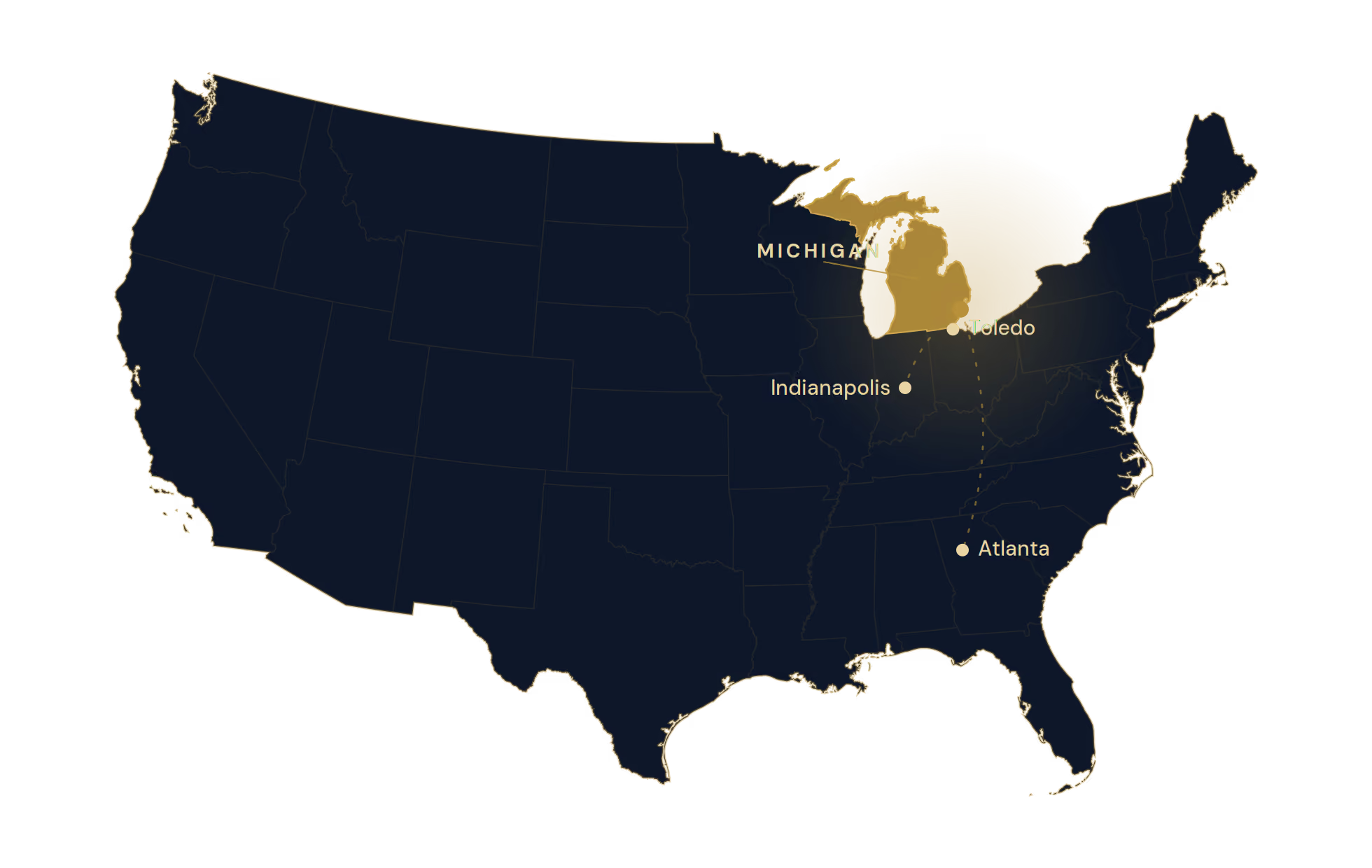
Rooted in Michigan. Built to go further.
AdjustFair started in Michigan, representing homeowners and businesses across the state, in Wayne, Oakland, Macomb, and beyond, in the kind of serious fire and water claims where real representation makes a real difference.
Michigan is home, and it's where the heart of our work is. But a fire is a fire and an underpaid claim is an underpaid claim, wherever it happens. As we grow, we're built to serve clients in the places that need us, without ever losing the local, personal way we do the work.
However you found us, and wherever you are, the promise is the same: someone serious, on your side, who treats your claim like it matters. Because it does.
Fair is what you're owed.
We hold them to it.
You make one call. From there, we take the weight off your shoulders and handle the claim the way it should be handled.