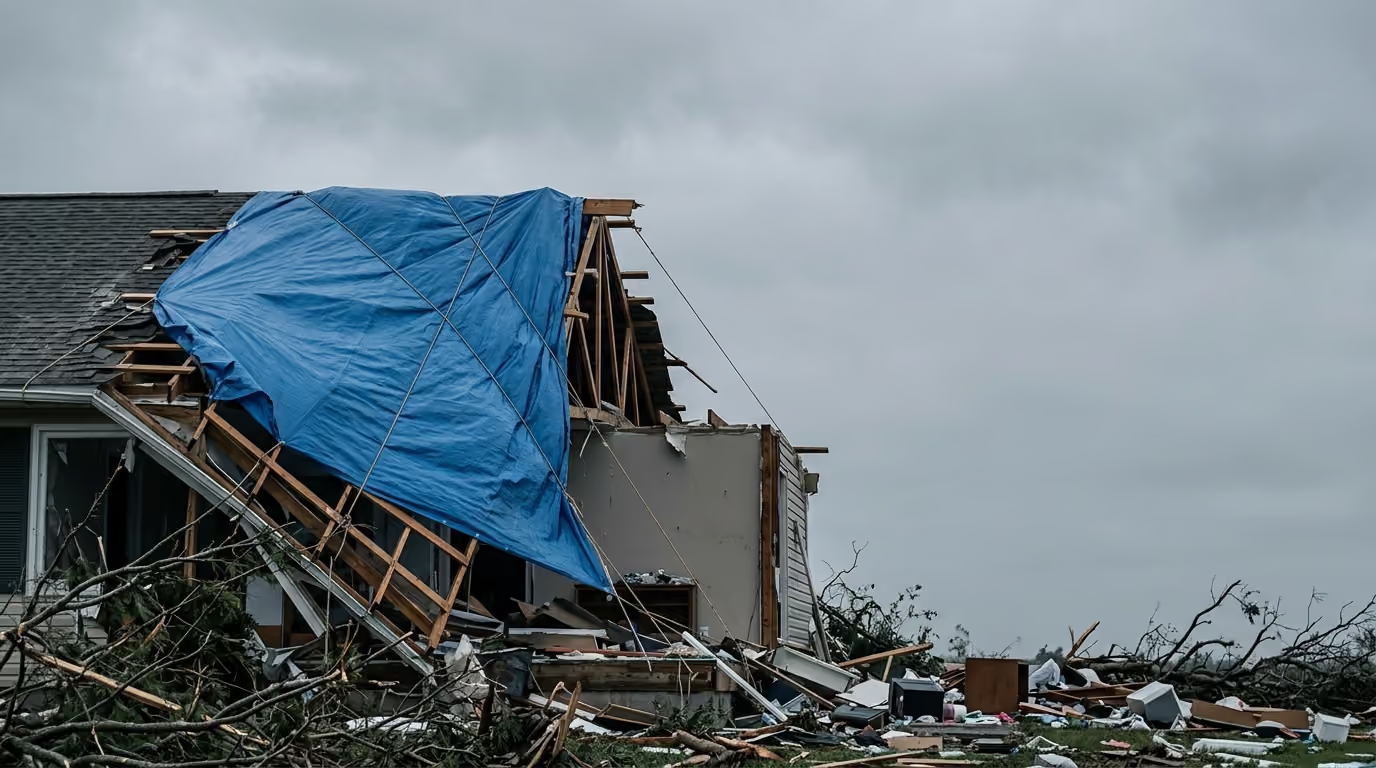
The hole is the part
When something strikes a building, the force does not stop where the damage is visible. It travels through framing, along load paths, down into foundations, and most of what it did is behind a wall or above a ceiling. These are the hardest claims to diagnose, which is exactly why they are the easiest to underpay.
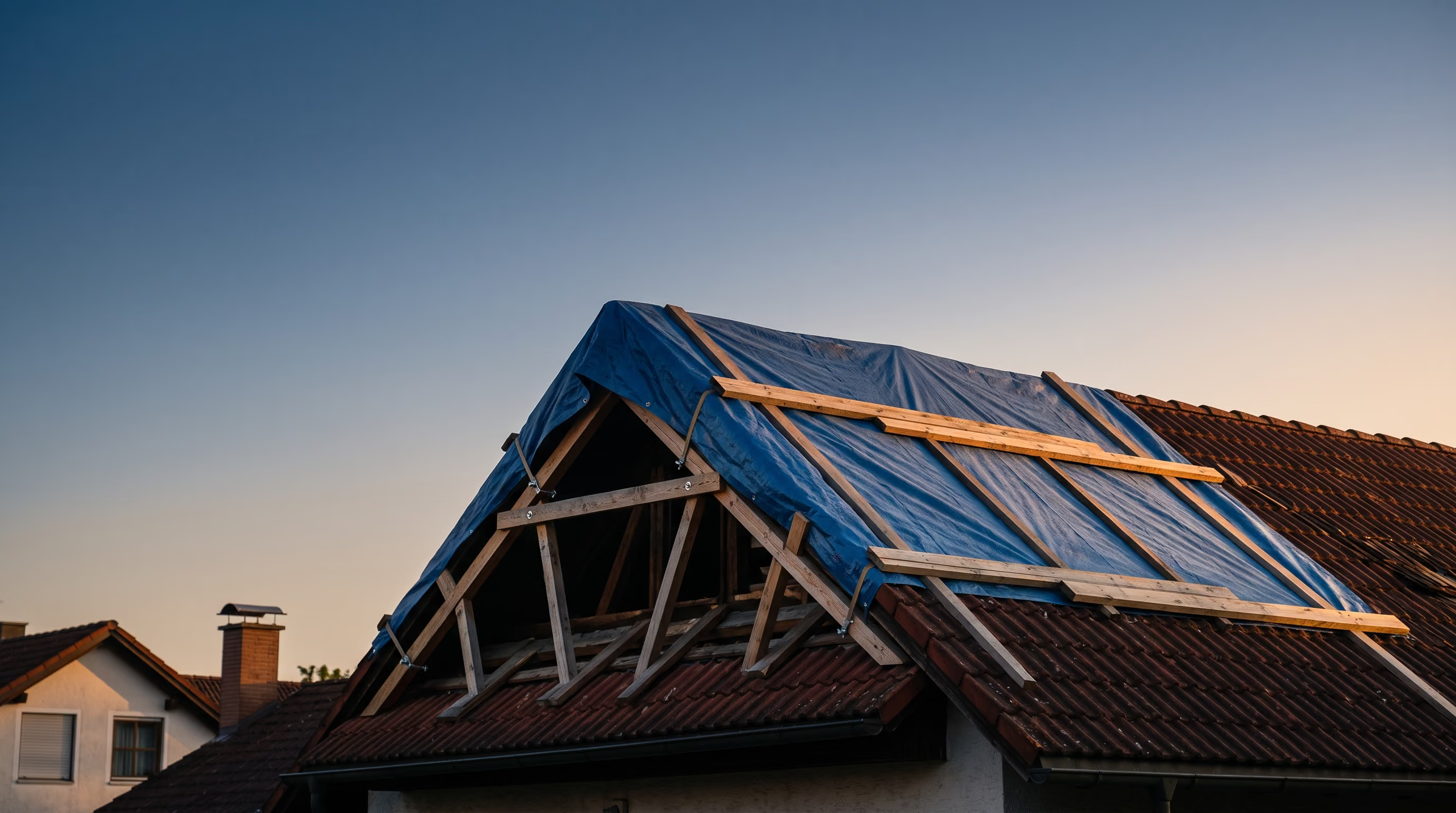
The event is obvious.
A tree came through your roof. Not a branch that landed and slid off. A tree that opened the roof, let water in, broke trusses, or is still sitting on the house.
A car hit your house. House or commercial building. We handle several of these a year and they are consistently worse than they look.
A tornado hit your house. Not general wind damage. A tornado that shook the structure, moved it, or took part of it down.
Your roof or structure collapsed. Roof, floor, wall or foundation. In Michigan the usual cause is snow and ice load, and flat commercial roofs, pole barns and garages go first.
An explosion. Rare, catastrophic, and the visible damage is a fraction of the real scope.
Six ways an impact claim gets smaller than it should be
Read these against the estimate you have been handed.
The scope stops at what is visible
An estimate gets written for the hole and nothing else, because nobody opened a wall to find what else moved. The burden then lands on you to prove there is more.
An engineer who is not yours
Insurance companies bring engineers onto structural claims, and those reports often conclude the damage came from how the building was built rather than from what hit it. That denies the claim rather than trimming it.
Water that came in through the opening
Everything between the impact and the building being properly closed up is a water loss living inside an impact claim, and it tends to be scoped as neither one.
Foundations and footings
On a vehicle strike the load goes down and out rather than up. Cracking and displacement at the base shows up later and almost never gets scoped on the first visit.
The emergency scope becomes the settlement
Tarping, board-up and shoring are covered costs, and they are also the fastest estimate anyone will write on your claim. If nobody replaces it with a real scope, the file keeps it.
The estimate itself
The big line items are on the page and look right, which is why the estimate reads as thorough. What moves the number is the dozens of smaller ones nobody wrote.
Timing
Your policy has deadlines you didn't negotiate.
Notice of loss, proof of loss, and a limit on how long you have to bring suit. All of them run from the date of loss, not from the day the insurance company gets back to you. Most people never learn what theirs are until one has already passed.
Some of those deadlines are set by state law rather than by your policy. In Michigan, here is how they work.
Right now
Go and try your doors.
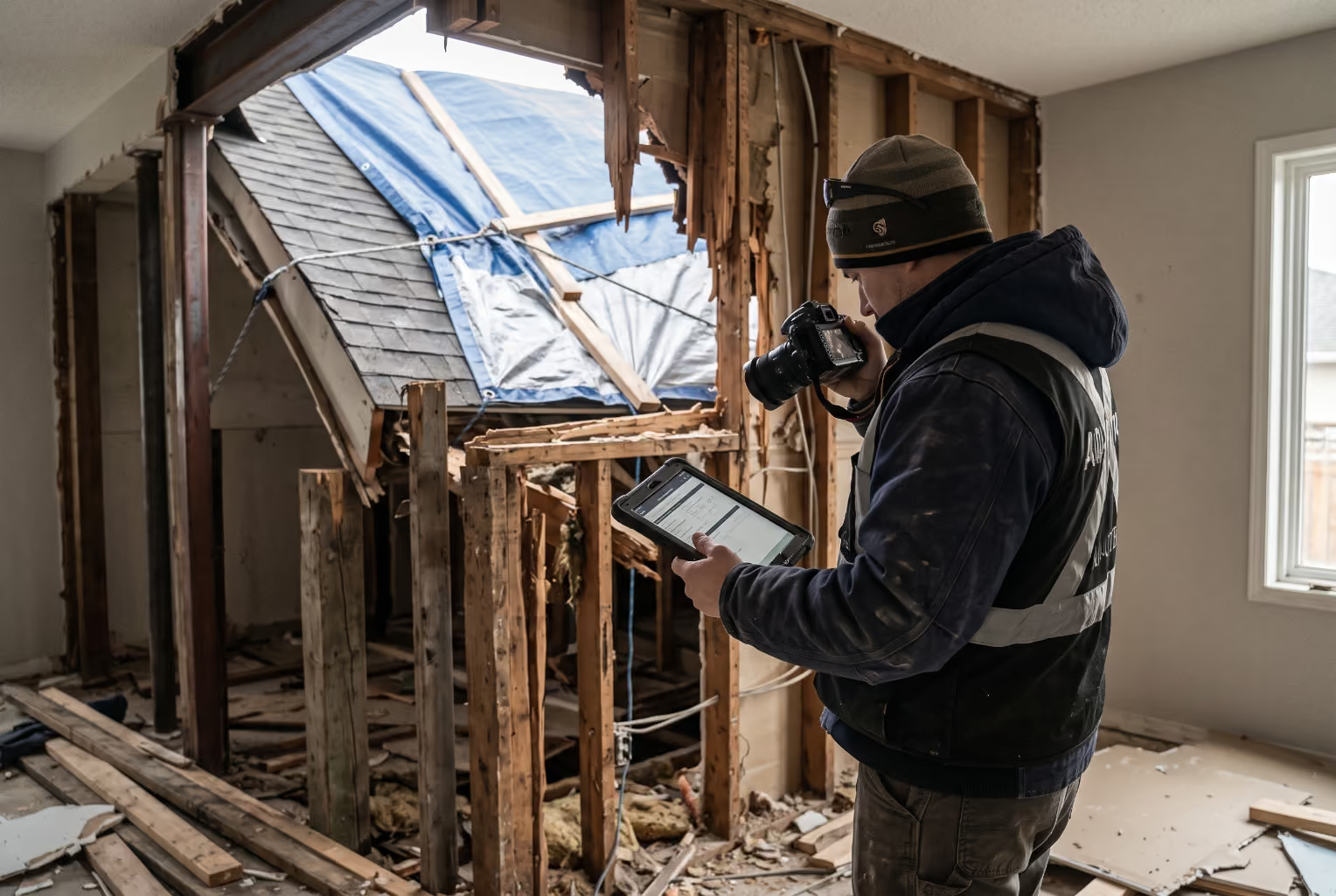
Get the building secured, because your policy requires it and those costs are usually covered. But photograph everything first, from several angles, including the parts about to be tarped or boarded over. Then walk the house. Doors that stick or will not latch that closed fine last week, windows that bind, new cracks at the corners of door and window openings, trim pulling away, floors that feel different underfoot. None of it proves anything on its own, because houses move. But after an impact these are the signs the structure took a shock and is sitting differently than it was, and every one of them is a reason to open something up and look. Find two or three, write down where they are and photograph them. That list is where an inspection should start.
What we actually do.
We document what the force did past the hole: framing, load paths, foundations, and the rooms that only show it in a door that sticks. We bring in an engineer when the evidence we gather is not enough on its own, and their calls come to us.
Already have an offer? It is usually not too late.
Claims can be supplemented or reopened, and a low first offer is the most common reason people call us. If a check has already been cashed, that is not necessarily the end of it either. If the offer is fair, we will tell you that.
What this costs you.
Nothing up front. We work on a contingency fee, which means we are paid a share of what we recover for you, and not until you recover. The number goes in writing before any work starts. If we look at your claim and do not believe we can add enough to be worth our fee, we will tell you, and that conversation still costs you nothing.
Something hit your building? Get it documented before it's closed up.
Tell us what happened and what you are seeing inside. No cost, no obligation.