
Roof and ceiling collapse insurance claims
Snow load, water-soaked ceilings, and what a policy means by collapse
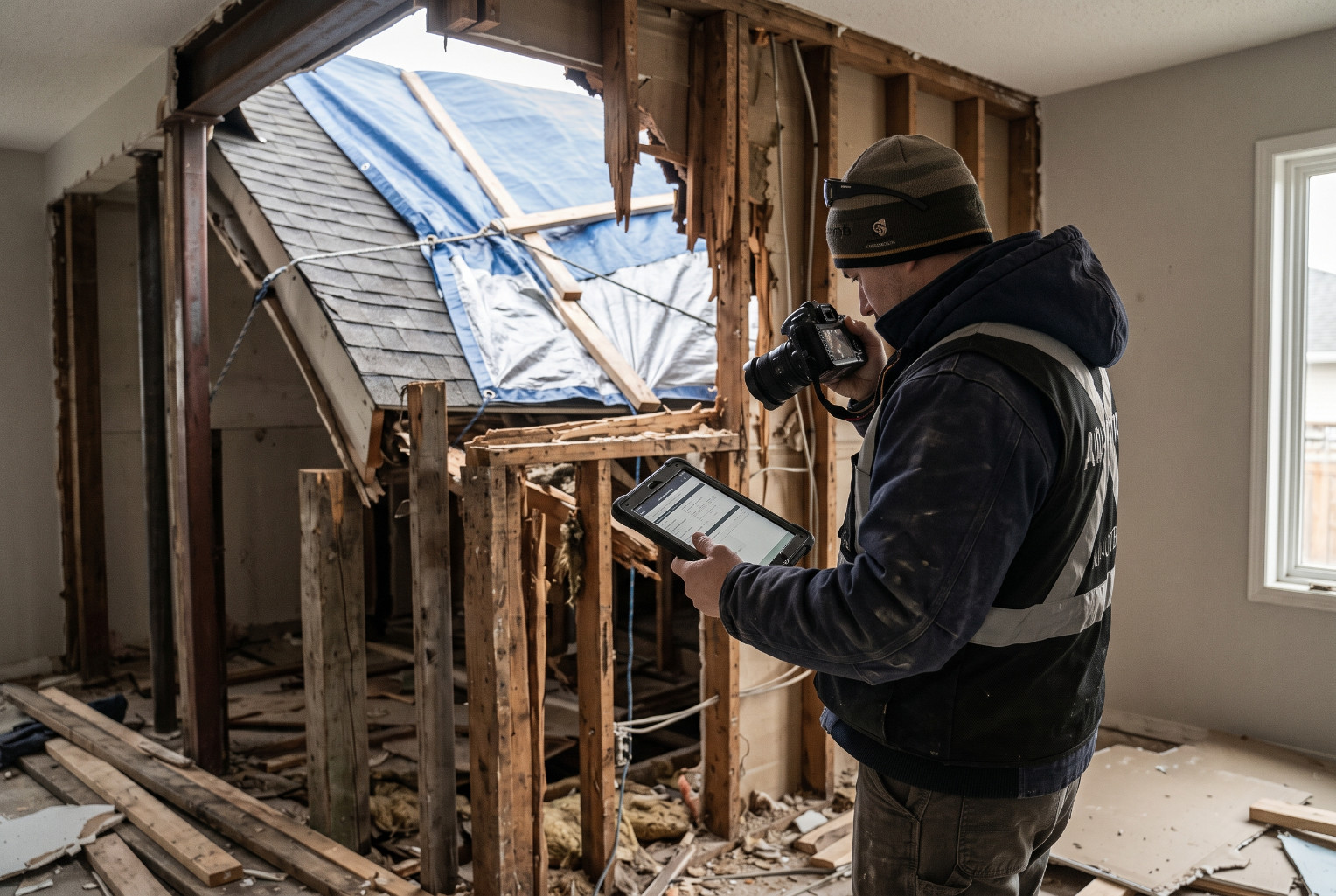
A ceiling on the floor or a roof that caved in under snow is frightening, and it is one of the harder claims to get right. Whether it is covered depends on what caused it, and policies use the word collapse more narrowly than most people expect.
Is a roof collapse covered by insurance?
Usually, when a covered cause brought it down. Weight of snow, ice or rain collecting on the roof is a covered cause of collapse in most homeowners policies, and so is a sudden water loss or a falling tree. In Michigan the most common cause is snow and ice load, and flat roofs, garages and pole barns tend to go first.
Expect the insurance company to look hard at the condition of the roof before it fell. Age, rot and long-term wear are where a collapse claim gets argued, which is why the condition before the collapse matters as much as the collapse itself.
What policies mean by collapse
Most policies cover collapse as an abrupt falling down or caving in. Sagging, bowing, cracking and bulging on their own are usually not treated as a collapse, even when they are signs one is coming. Hidden decay or insect damage that nobody knew about is sometimes covered as a cause of collapse. Damage you knew about and left is usually not.
A ceiling that came down from water
Many ceiling collapses are really water losses. Water from a failed pipe, a leaking roof or the unit above soaks the drywall until it gives way. In that case the claim follows the water: what failed, when, and how far the water reached. See burst and frozen pipe claims and is a roof leak covered by insurance.
Why these claims get underpaid
A collapse rarely stays where it happened. The load that brought down one section goes somewhere: into the walls, the framing beside it and the foundation. A repair estimate that rebuilds only the part on the floor misses that. On older houses, the repair also has to fit how the house was actually built. In a Clifford claim on a home with an early 1900s rock-wall foundation, the insurance company never wrote an estimate, and the claim settled at $121,059 on ours. Every claim is different, but a structural claim is only as good as the estimate behind it.
What to do
- Get out and stay out of any area that is sagging or has come down.
- Photograph it before anything is cleared, including the roof above and the rooms beside it.
- Get the building secured. Shoring and covering openings are expected and usually part of the claim.
- Keep snow-removal and maintenance records that show the roof's condition before it fell.
If a tree caused it, see when a tree falls on your house.
See it on a real claim
Roof or ceiling came down? |Get the cause on record first.
Tell us what came down and what you're seeing around it. We'll tell you honestly whether it's structural and whether you need us. No cost, no obligation.